
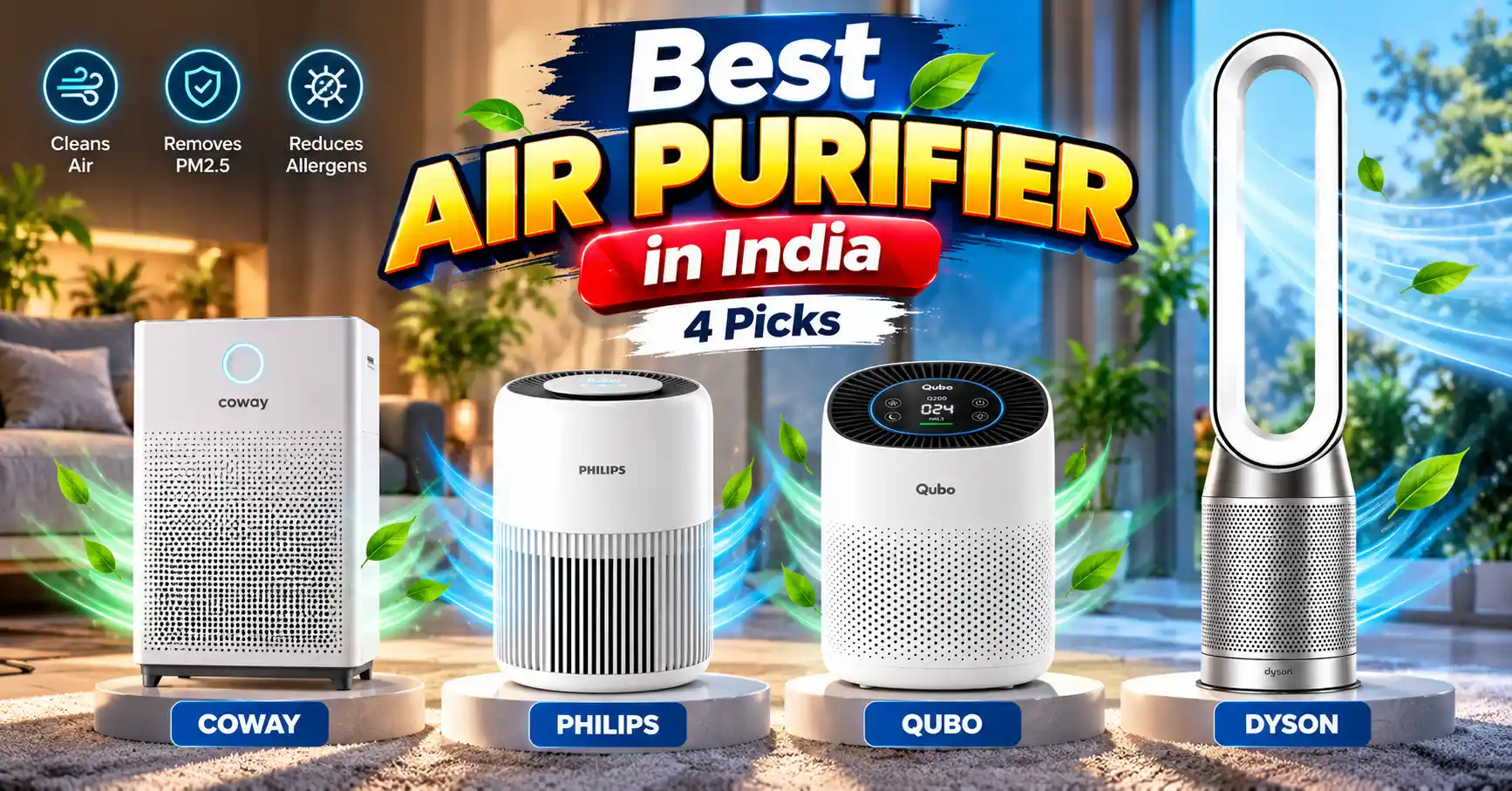
When the air outside turns hazy, it’s natural to want cleaner air at home. But choosing an air purifier can feel confusing: every model promises impressive filtration, room coverage and smart features, while the replacement filters can add a surprising amount to the long-term cost.
The right purifier depends on the room where you’ll use it, how polluted the air gets, and whether you can find replacement filters at a price you’re comfortable paying. Below are four options worth considering, followed by a straightforward guide to choosing the right size and estimating the running cost.
A note on how these picks were chosen: This guide compares manufacturers’ published specifications and listed prices. It isn’t based on independent lab testing, and prices and availability can change.
Quick picks:
| Pick | Best For | Published CADR and Coverage | Approximate Price (October 2026) |
|---|---|---|---|
| Coway AirMega 150 | A strong all-round option for a bedroom or smaller living room | 303 m³/h; manufacturer lists coverage up to 355 sq ft | ₹14,999 on Coway India |
| Philips AC0920 | A compact, lower-cost purifier with a PM2.5 sensor | 250 m³/h; coverage up to 30 m² | ₹8,000–₹9,000 depending on the offer |
| Qubo Q200 | A budget option for a small room, with app and voice controls | 150 m³/h; coverage up to 200 sq ft | ₹6,990 on Qubo India |
| Dyson Purifier Cool Gen1 TP10 | A premium purifier that also works as a fan | Whole-room purification; Dyson tested it in an 81 m³ room | ₹39,900 MRP on Dyson India |
Note: Prices are snapshots from the brands’ India websites, not guaranteed selling prices. Check current stock and replacement-filter costs before ordering.
1. Coway AirMega 150: Best all-round pick
 Best all-round pick
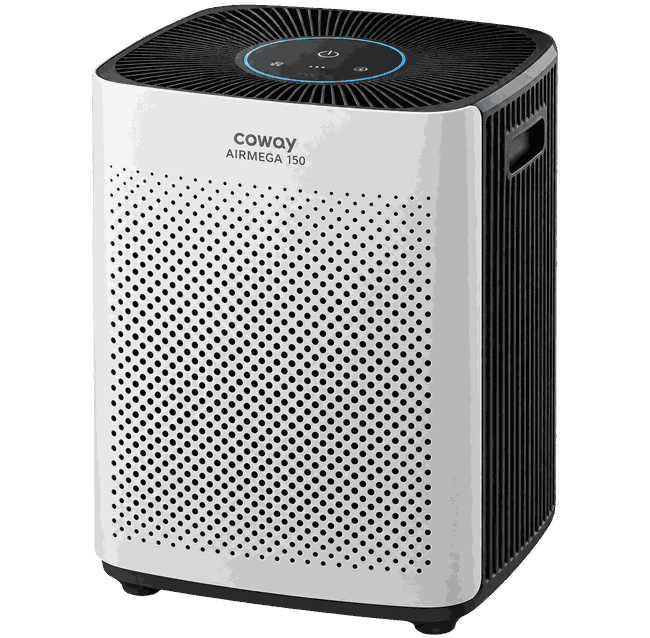
Coway AirMega 150
Breathe cleaner. Live better. Find the right air purifier for your room.
The AirMega 150 is a sensible shortlist option if you want a purifier focused on air cleaning rather than phone controls. Coway lists a CADR of 303 m³/h and coverage of up to 355 sq ft. It has a washable pre-filter, a urethane carbon filter and a True HEPA filter, plus an air-quality indicator and automatic mode. The listed noise range is 22–49 dB, and power consumption is 38 W.
One practical detail: Coway’s carbon filter is a urethane filter, not a bed of carbon pellets. That’s a reminder to compare the actual filter design and the manufacturer’s claims rather than relying on a single rule of thumb about what all carbon filters should look like.
Good fit if: You want a higher-CADR option among these four, with automatic mode and a washable pre-filter.
Keep in mind: It has no app control, and its listed coverage is a manufacturer rating—not a guarantee that it will clean a large, open room quickly during heavy pollution. For more demanding conditions, size the purifier to the room using the CADR guidance below.
2. Philips AC0920: Best compact budget choice
 Best compact budget choice
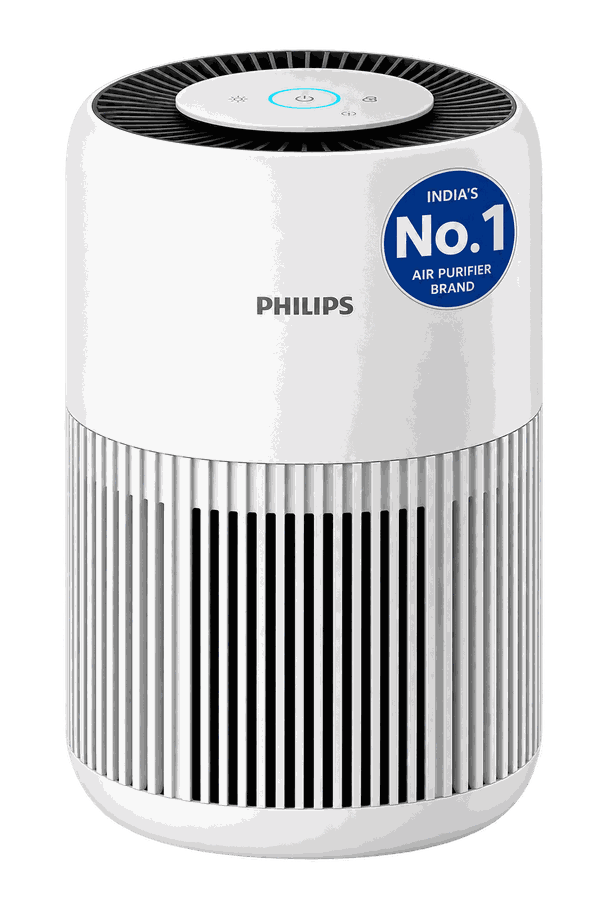
Philips AC0920
Breathe cleaner. Live better. Find the right air purifier for your room.
The AC0920 is a compact option for bedrooms, studies and other modest-sized rooms. Philips lists a CADR of 250 m³/h, coverage up to 30 m², a PM2.5 sensor and a sleep mode that operates at 20.5 dB. Its filter is called HEPA NanoProtect; Philips says it captures 99.97% of particles as small as 0.003 microns as air passes through the filter.
Good fit if: You want a relatively affordable purifier from an established brand, and your room is within its recommended size.
Keep in mind: The AC0920 is a compact-room model. Philips’ product information doesn’t list app connectivity for this model, so don’t buy it expecting phone-based controls. Check the price and availability of its compatible replacement filter, FY0900/30, before buying.
3. Qubo Q200: Best low-cost replacement filter
 Best low-cost replacement filter
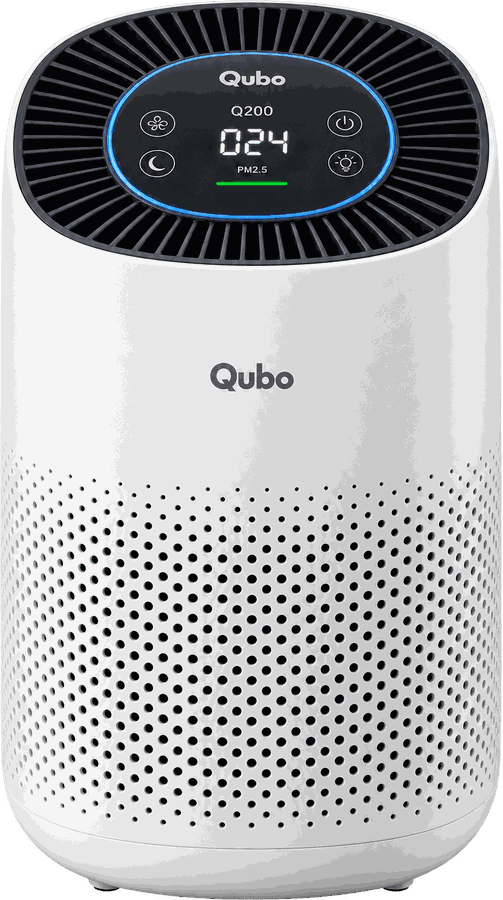
Qubo Q200
Breathe cleaner. Live better. Find the right air purifier for your room.
The Qubo Q200 stands out for its lower purchase price and relatively inexpensive replacement filter. Qubo lists a CADR of 150 m³/h and coverage up to 200 sq ft, along with app and voice controls, a dust sensor, and a True HEPA H13 filter. The official Q200 replacement filter was listed at ₹1,590 when checked.
Good fit if: You want app controls and a budget-friendly purifier for a smaller bedroom or study.
Keep in mind: The Q200’s 150 m³/h CADR makes it the smallest-capacity machine in this shortlist. Its 200 sq ft coverage claim is not a reason to put it in a much larger living room. Qubo lists filter life of up to 9,000 hours, but actual life depends on use and air quality; follow the filter indicator and manual.
4. Dyson Purifier Cool Gen1 TP10: Best premium purifier fan
 Best premium purifier fan
Dyson Purifier Cool Gen1 TP10
Breathe cleaner. Live better. Find the right air purifier for your room.
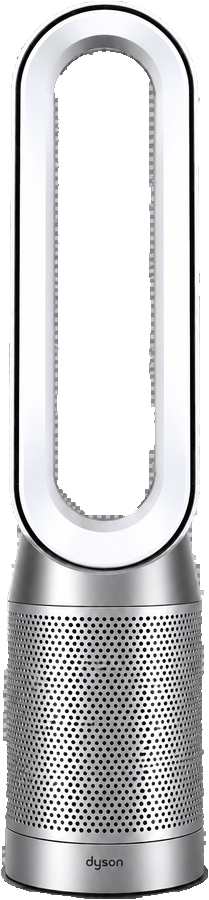
The TP10 combines a purifier with a fan that circulates air around the room. Dyson says it has H13 filtration, an activated-carbon layer, automatic mode and an LCD display, and that whole-room purification was tested in an 81 m³ room. Dyson’s India page lists a ₹39,900 MRP, though availability and discounts can change. The replacement filter was listed at ₹4,990, and Dyson recommends changing it every 12 months.
Good fit if: You want a premium fan-and-purifier combination and value its design and airflow.
Keep in mind: The TP10’s extra cost buys the fan and design as well as filtration. Dyson says this model doesn’t connect to the MyDyson app; it comes with a remote. Its published information doesn’t provide a CADR figure comparable to the other models here, so I wouldn’t rank it as a straightforward “large-room winner” based on the information available.
How to choose an air purifier that fits your room
Start with room size and CADR
CADR (Clean Air Delivery Rate) measures the volume of filtered air a purifier supplies over time. A higher CADR generally allows it to clean the air more quickly or cover a larger room. The US Environmental Protection Agency (EPA) advises selecting a portable air cleaner with a CADR suited to the room size. For smoke, its general recommendation is to choose a CADR, measured in cubic feet per minute (CFM), that is appropriate for the room’s area. at least two-thirds of the room’s area in square feet.
As a rough conversion, that works out to about 1.13 m³/h of CADR per square foot of room area. It’s a rule of thumb, not a promise of performance: ceiling height, open doorways, the purifier’s fan setting and the test method used for the product’s coverage claim all matter. For rooms with high ceilings or large, open layouts, choose an air purifier with a higher cleaning capacity or use multiple units to improve air circulation and coverage.
Also, don’t assume the “up to” room-size number means the purifier will clean that entire space quickly in every condition. If you’re choosing between two sizes, a higher CADR gives you more headroom.
Check what the filters are designed to capture
HEPA filters are designed to trap airborne particles, helping remove dust, pollen, and other tiny pollutants from indoor air. Activated carbon is used for some gases and odours. The EPA notes that CADR is a particle rating, not a measure of gas removal, and that carbon filters need a substantial amount of material to be effective.A HEPA or H13 label can be useful, but it shouldn’t be your only buying criterion. Check the purifier’s CADR, the product’s filter details, and whether replacement filters are easy to get. A filter’s stated efficiency alone cannot determine how fast an air purifier will clean the air throughout an entire room.
Add up filter costs before buying
The initial buying price is just one part of the total cost of owning an air purifier. Look up the genuine replacement filter, its current price, and the manufacturer’s suggested replacement interval. Then use this simple estimate:
Air Purifier Ownership Cost Calculator
Estimate how much your air purifier and replacement filters may cost over time.
Note: This estimate excludes the original filter supplied with the purifier, electricity, maintenance and any delivery charges. Replacement timing depends on the model, usage and air quality. Check the manufacturer’s instructions and filter indicator.
Three-year cost = purifier price + (replacement filter price × replacements needed in three years)
For example, if a ₹6,000 purifier needs a ₹3,500 filter every six months, you might need five replacements during the first three years. That would bring the estimated total to ₹23,500, including the purifier. This is just an example—the actual interval depends on the model, how often it runs and the air it has to clean.
Don’t assume every filter needs changing on the same schedule. Coway lists 8,500 hours for the AirMega 150’s HEPA and carbon filters, Philips lists up to one year for the AC0920’s compatible filter, and Dyson recommends 12 months for the TP10. Follow the instructions and indicator for your model; heavy use or poor air quality can affect filter life.
Think about noise and where the unit will sit
A purifier only helps while it’s running. A loud unit that gets switched off at night may be less useful to you than a quieter one you can comfortably leave on. If you plan to use it in a bedroom, check the sleep-mode noise rating and whether the display lights can be dimmed.
Place the air purifier where air can flow freely in and out without being blocked by walls, furniture, or other objects. Avoid pushing it behind curtains or furniture, and keep doors and windows closed during periods when outdoor air is heavily polluted.
Small habits that help indoors
An air purifier is most effective when combined with other habits that help maintain good indoor air quality. Reduce pollution at the source where you can: use a kitchen chimney or exhaust fan while cooking, and damp-mop or wipe surfaces rather than dry-dusting them.
Check local air-quality readings before opening windows. Ventilate when outdoor air is cleaner; during a severe pollution episode, opening windows may bring more pollution indoors. A portable air purifier can help lower the level of certain airborne particles indoors, but it cannot eliminate all pollutants or serve as a substitute for professional medical advice and treatment.
Houseplants can make a room feel more inviting, but they don’t have a CADR rating and shouldn’t be treated as a substitute for a room-sized air cleaner. That’s a practical distinction: a purifier’s particle-cleaning capacity can be compared against room size, while a plant can’t be sized or selected that way.
Frequently asked questions
Which of these is best for Delhi pollution?
Among these four, the Coway AirMega 150 has the highest published CADR at 303 m³/h. That doesn’t automatically make it the right choice for every Delhi room: measure the room, consider whether it opens into other spaces, and choose a purifier with enough CADR for the area you actually want to clean. For a large living room, look for a higher-capacity model or consider multiple units.
How much will an air purifier add to my electricity bill?
It depends on the unit’s wattage, fan setting, how many hours it runs and your electricity tariff. Here’s a simple estimate:
Monthly energy use in kWh = watts ÷ 1,000 × hours per day × 30
At 38 W, running the Coway AirMega 150 for 12 hours a day would use about 13.7 kWh in a 30-day month. At ₹8 per unit, that’s roughly ₹110. Your actual bill will vary, and the purifier may use less power when running at a lower setting or in automatic mode. Coway lists the AirMega 150 at 38 W.
Can I run an air purifier while I sleep?
Yes, if you’re comfortable with its sound and follow the manufacturer’s instructions. Look for a sleep mode with a low noise rating and dimmed display. Philips lists 20.5 dB for the AC0920’s sleep mode.
How often should I change the filter?
Use the manufacturer’s instructions and the purifier’s filter indicator. Filter life varies by model, how long you run the machine and how polluted the air is. Clean a washable pre-filter as directed, but don’t wash the main HEPA filter unless the manual explicitly says it is washable.
Do plants clean indoor air as well as a purifier?
They’re fine to have, but they aren’t a substitute for a purifier sized to a room. A purifier has a CADR that can be compared with the room’s area; plants don’t.
The takeaway
For many homes, the Coway AirMega 150 is a good place to start if you want a higher-CADR option with automatic mode. The Philips AC0920 is worth considering for a compact room on a tighter budget, while the Qubo Q200 is best kept to smaller spaces where its lower-cost filter and app controls are useful. The Dyson TP10 makes the most sense if you specifically want a premium purifier fan.
Whichever model you choose, match its CADR to the room, check the replacement-filter cost and buy from a source where genuine filters are available. Those details will matter long after the unboxing.
READ THIS ALSO: Best Android & Smart TV in India (2026)