








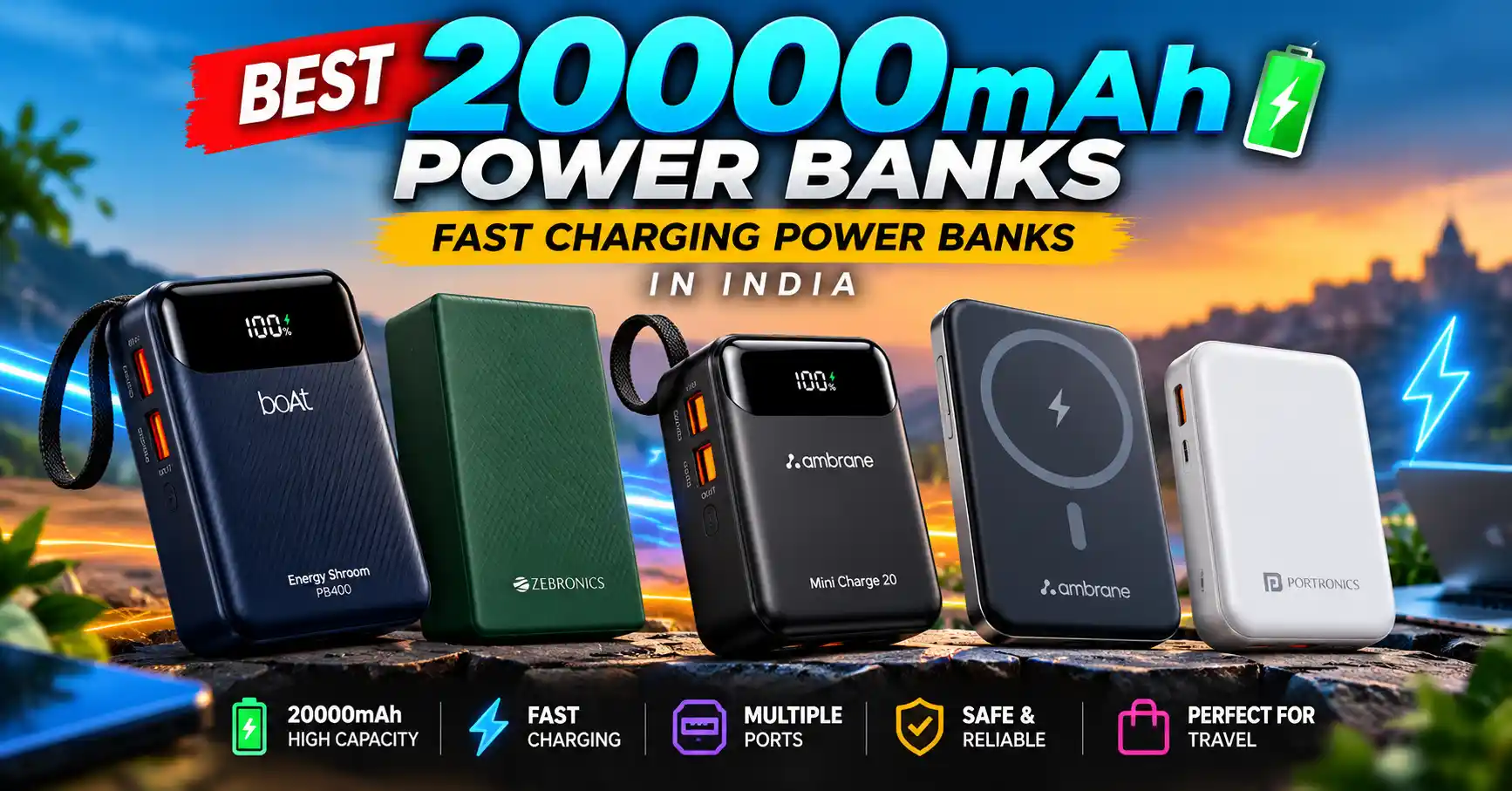
For most smartphone users in India, the Xiaomi Power Bank 4i (33W) and Xiaomi Power Bank 5i (67W) are the best all-round 20,000mAh fast charging power banks, balancing reliable USB-C PD/PPS speeds, multi-layer circuit protection, and competitive pricing between ₹1,899 and ₹3,199. If you need to charge a Type-C laptop (such as a MacBook Air, ThinkPad, or Ultrabook) alongside your phone, opt for a high-wattage model like the Stuffcool Major Ultra (65W), URBN Ultra Volt (70W), Portronics Ignis 65 (65W), or the premium Anker 87W Built-in Cable Power Bank. For budget everyday backup under ₹1,500, the Ambrane MiniCharge 20 (22.5W) and boAt EnergyShroom PB400 (22.5W) cover basic fast-charging needs.
Key Takeaways
- Real Usable Capacity is ~60%–65%: Because internal battery cells operate at 3.7V and step up to 5V–20V during charging, any genuine 20,000mAh power bank delivers roughly 12,000mAh to 13,500mAh of actual output—enough to charge a 5,000mAh phone 2.4 to 2.7 times.
- Wattage Tiers Matter: A 22.5W power bank is sufficient for budget phones, 30W–45W (with PPS) is ideal for iPhones and Samsung Galaxy flagships, and 65W+ is mandatory for charging laptops.
- Check Input Charging Speed: Always look for two-way fast charging (at least 18W to 45W USB-C input) so the power bank itself recharges in 2 to 4.5 hours rather than overnight.
- 100% Flight Legal in India: A 20,000mAh power bank equals 74 Watt-hours (Wh), keeping it safely below the 100Wh DGCA and BCAS limit for cabin baggage on Indian flights (never pack it in check-in luggage).
- BIS Certification is Non-Negotiable: Only buy power banks bearing a valid Bureau of Indian Standards (BIS) CRS R-number with short-circuit and thermal runaway protection.
Introduction
Buying a 20,000mAh fast charging power bank in India has become noticeably trickier over the past couple of years. While smartphone batteries have grown to 5,000mAh–6,000mAh and wall chargers routinely boast 45W to 120W speeds, many power banks still advertise generic “Fast Charging” while capping out at outdated 18W or 22.5W USB-A outputs. Worse, if the power bank does not support the specific charging protocol your phone uses—such as USB Power Delivery (PD 3.0) or Programmable Power Supply (PPS)—your ₹70,000 flagship phone will trickle-charge at a sluggish 10W to 15W.
Top 10 20000mAh Fast Charging Power Banks in India (Comparison Table)
Note: Street prices on Amazon India, Flipkart, Reliance Digital, and Croma fluctuate during festive sales and bank offers. Information may vary; check the official brand or retail source for the latest details.
| Model Name | Max Output Wattage | Max Input (Recharge Speed) | Ports & Cables | Battery Type | Approx. Price (₹) | Best Suited For |
|---|---|---|---|---|---|---|
| Xiaomi Power Bank 4i | 33W Max (PD 3.0 / QC 3.0) | 30W Type-C | 1x USB-C, 2x USB-A | Lithium-Ion | ₹1,899 – ₹2,199 | Everyday Android & iPhone users (Best Value) |
| Xiaomi Power Bank 5i | 67W Max (PD / PPS) | 45W–65W Type-C | 1x USB-C, 1x USB-A (+ Integrated Cable option) | Lithium-Ion | ₹3,199 | Fast phone charging & light Type-C laptops |
| Anker 20,000mAh 87W (Travel Essential) | 87W Total (65W Max Single Port) | 65W Type-C (~1.5 hrs) | Built-in USB-C Cable, 1x USB-C, 1x USB-A | Premium Li-Po / Li-Ion | ₹5,999 | MacBook Pro/Air, iPad Pro & flagship phones |
| URBN Ultra Volt 20,000mAh | 70W Max (PD 3.0 / PPS) | 60W Type-C | 2x USB-C, 1x USB-A | Lithium-Polymer | ₹2,999 – ₹3,499 | Compact high-wattage laptop & phone users (343g) |
| Stuffcool Major Ultra 20K | 65W Max USB-C PD + PPS | 45W–60W Type-C | 1x USB-C, 1x USB-A | Lithium-Polymer | ₹3,299 – ₹3,999 | Made-in-India laptop & Samsung PPS charging |
| Portronics Ignis 65 (20K) | 65W Max USB-C PD | 45W–60W Type-C | USB-C + USB-A | Lithium-Polymer | ₹1,999 – ₹2,499 | Budget Type-C laptop & tablet backup |
| Belkin BoostCharge 20K (30W) | 30W USB-C PD | 20W–30W Type-C | Built-in USB-C Cable, 1x USB-C, 1x USB-A | Lithium-Polymer | ₹3,499 – ₹3,999 | iPhone 15/16 series, iPads & safety-conscious flyers |
| Realme TechLife 45W 20,000mAh | 45W Max (SuperVOOC / PD) | 30W–45W Type-C | Built-in Cable, Type-C, USB-A | Lithium-Polymer | ₹2,299 – ₹3,499 | Realme, OnePlus, and Oppo users who prefer native fast charging |
| Portronics Luxcell Wireless Mini 20K | 22.5W Wired / 15W Wireless | 20W Type-C | 1x USB-C, 1x USB-A + Magnetic Wireless Pad | Lithium-Polymer | ₹1,699 – ₹1,999 | Users wanting magnetic wireless + wired versatility |
| Ambrane MiniCharge 20 | 22.5W Max (USB-A) / 20W PD (Type-C) | 18W–20W Type-C | 1x USB-C, USB-A | Lithium-Polymer | ₹1,399 | Compact budget backup under ₹1,500 |
Detailed Review & Breakdown by Use Case
Rather than buying strictly by brand name, match your purchase to the highest-wattage device in your backpack.
1. Best Overall for Smartphones & Tablets (30W to 45W Tier)
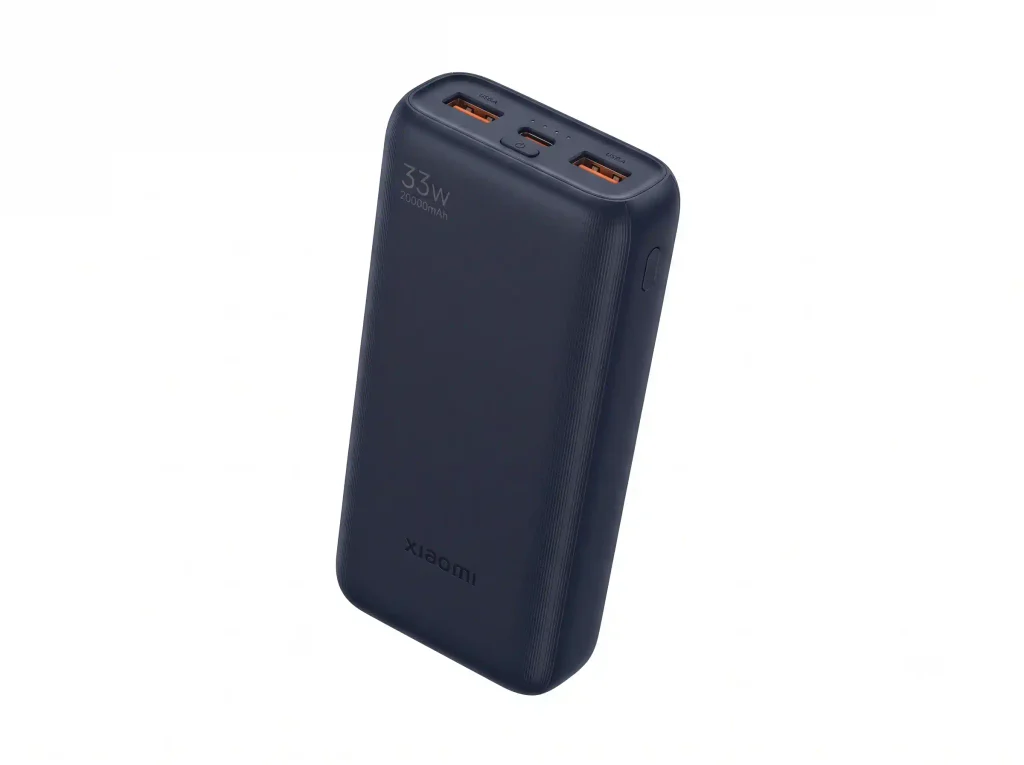
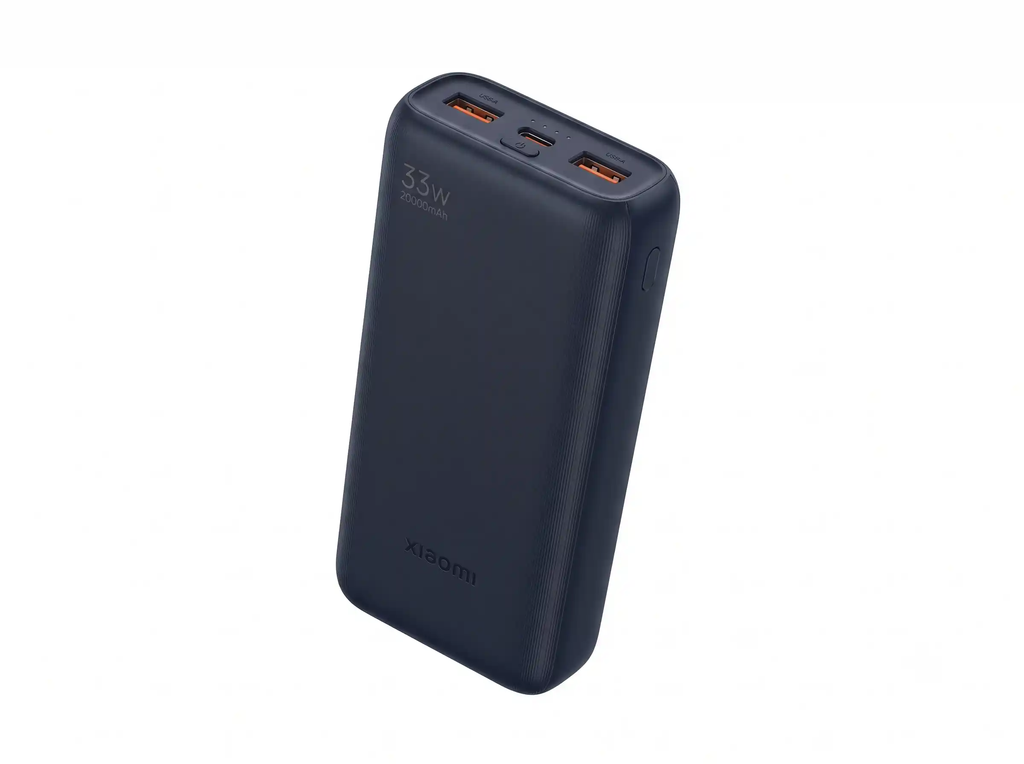
1.Xiaomi Power Bank 4i 20000mAh (33W): Xiaomi remains the benchmark in India for price-to-performance ratio. Delivering up to 33W via USB-C with Power Delivery (PD 3.0), it comfortably fast-charges iPhones (at their full ~27W–30W peak), Xiaomi/Redmi phones, and Samsung devices. It features 12-layer circuit protection, a low-power delivery mode (activated by double-pressing the power button) for Bluetooth earbuds and smartwatches, and recharges quickly via 30W input.
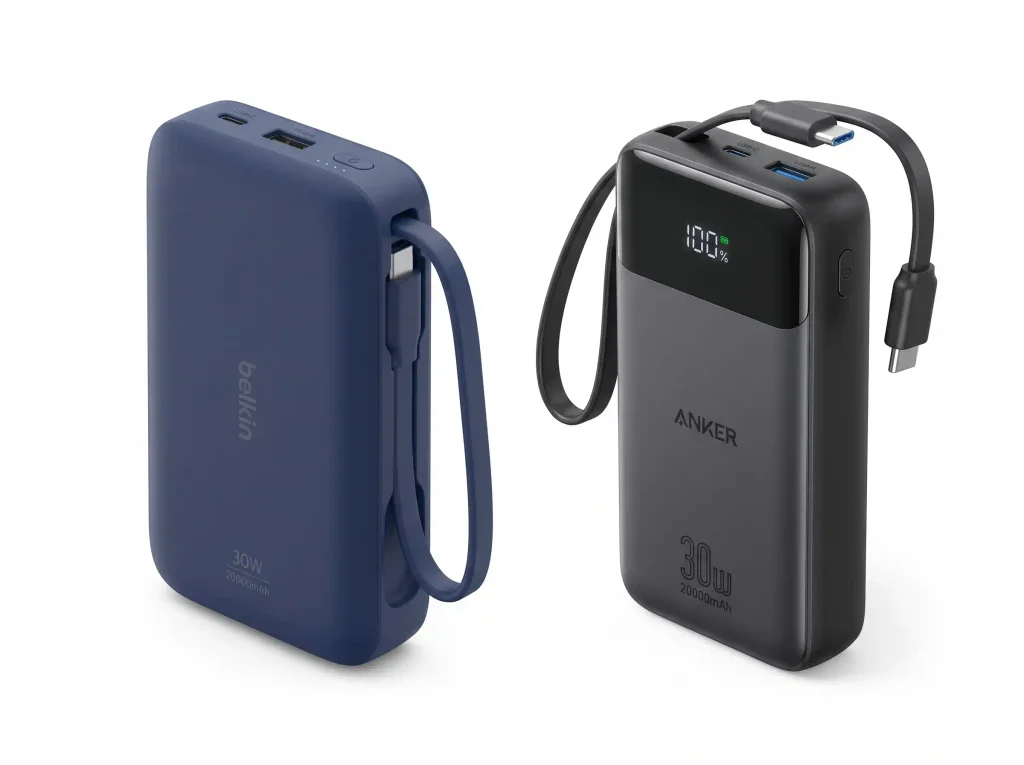
2.Belkin BoostCharge 20K (30W with Built-in Cable) and Anker Zolo 20K (30W): If you prefer travelling without carrying separate cables, both Belkin and Anker offer 30W PD power banks with durable built-in cables for convenient charging on the go.
They run cooler under sustained load and include pass-through charging, though you pay a premium for international build standards and warranty support.
3.Realme TechLife 45W 20000mAh: Most third-party power banks drop BBK-group phones (OnePlus, Realme, Oppo) down to standard 15W–18W PD speeds. Models supporting high-current SuperVOOC/Dart protocolsAlongside 45W PD allow compatible phones to hit much faster top-up times.
2. Best 20000mAh Power Banks for Laptops (65W to 87W Tier)
Standard 22.5W or 33W power banks cannot charge a laptop while it is in use—the voltage negotiation fails or the laptop rejects the low wattage. To charge a MacBook Air, MacBook Pro 14-inch, Dell XPS, HP Pavilion, or Lenovo ThinkPad via USB-C, look for a minimum 65W single-port PD output:
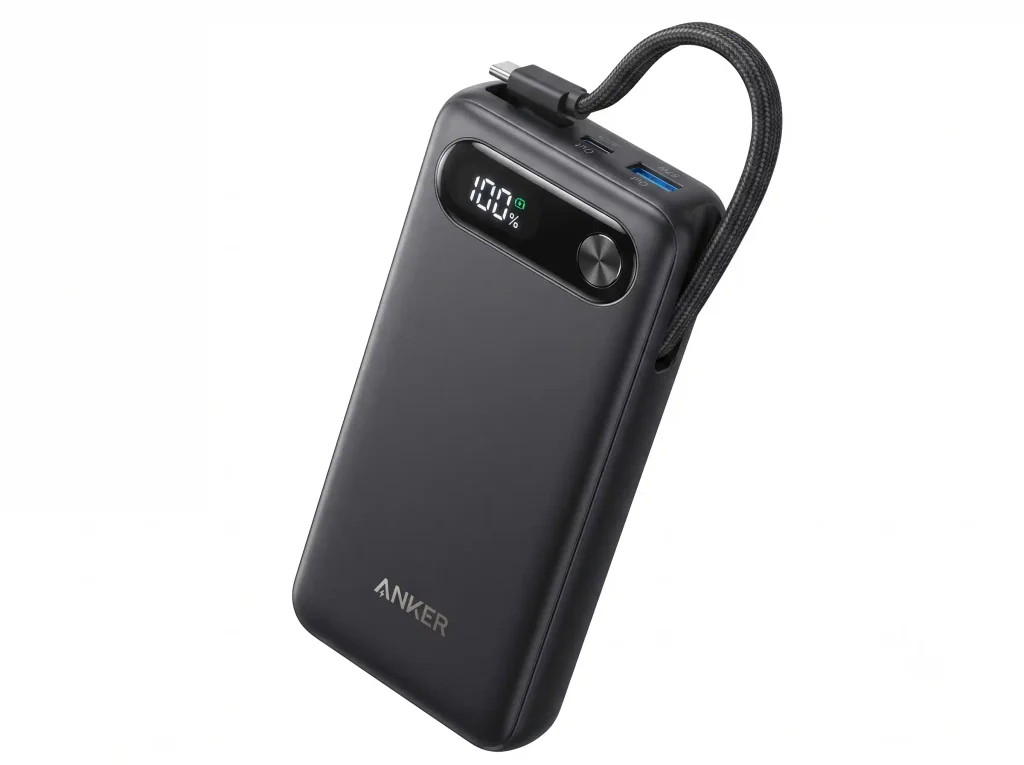
1.Anker 20,000mAh 87W (Travel Essential): Delivers up to 65W to a single laptop via its built-in USB-C cable (or 87W combined across ports when charging a laptop and phone simultaneously). With a 65W GaN wall adapter, the power bank recharges from 0% to 100% in roughly 1.5 hours.
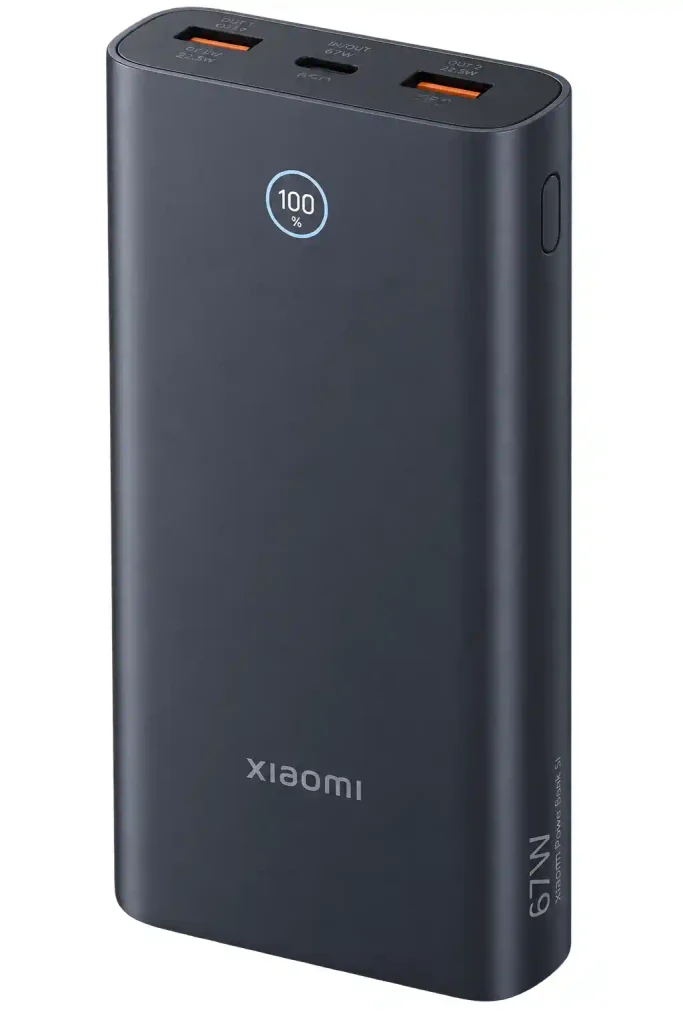
2.Xiaomi Power Bank 5i (67W): Bridging the gap between mid-range pricing (around ₹3,199) and laptop capability, the 5i pushes 67W max output and lists a verified rated capacity of 12,000mAh at 5V/3.6A, making it a strong contender for hybrid workers carrying both a Xiaomi/Android phone and an ultrabook.
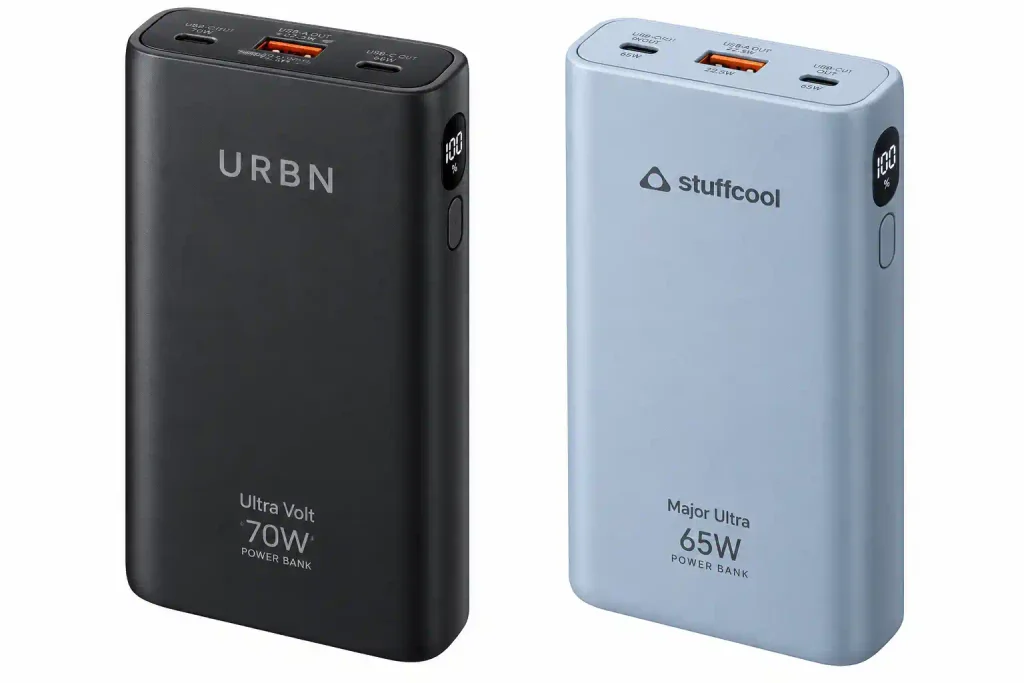
3.URBN Ultra Volt (70W) & Stuffcool Major Ultra (65W): URBN focuses heavily on power-to-weight ratio, packing 70W PD 3.0 + PPS output into a 343-gram chassis. Stuffcool’s Major Ultra is a dependable Made-in-India alternative offering 65W USB-C PD alongside 45W Samsung Super Fast Charging 2.0 (PPS) support.
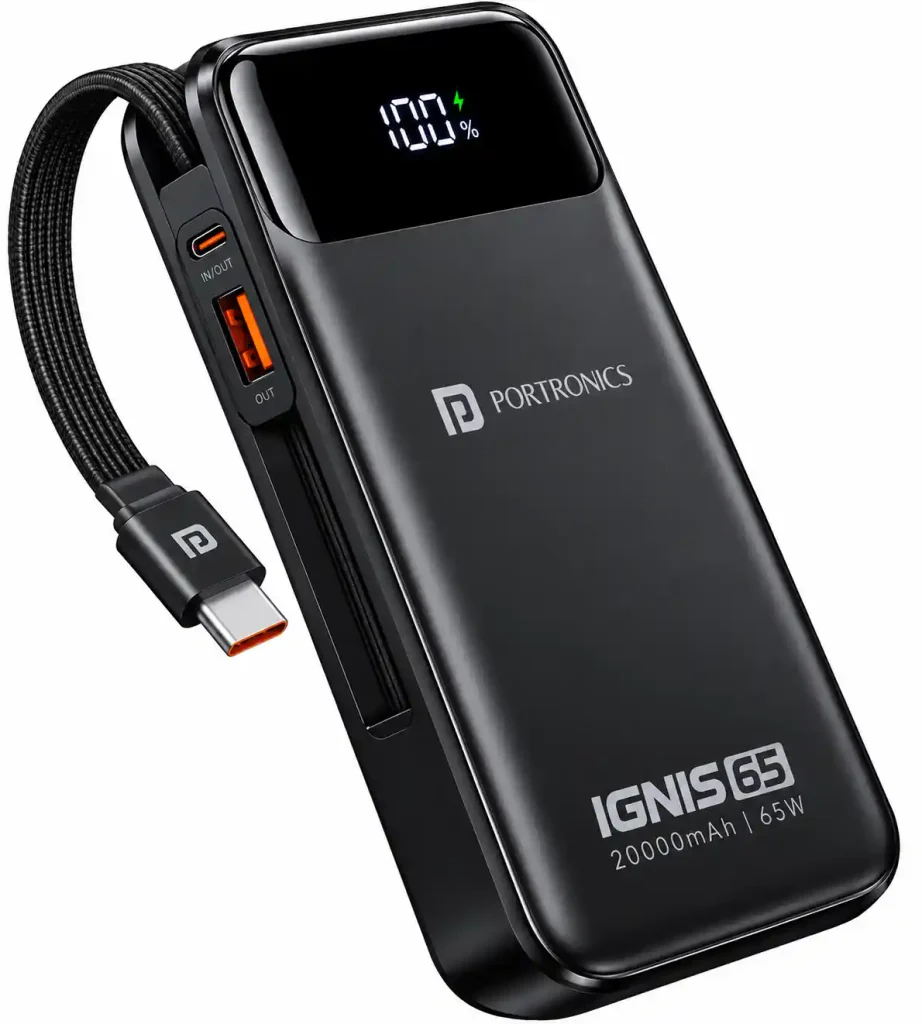
Frequently priced around ₹1,999 to ₹2,499, this is one of the most affordable entry points into 65W laptop-grade PD charging in India, though heavy dual-port usage can generate noticeable warmth.
3. Best Wireless & Magnetic 20000mAh Power Banks
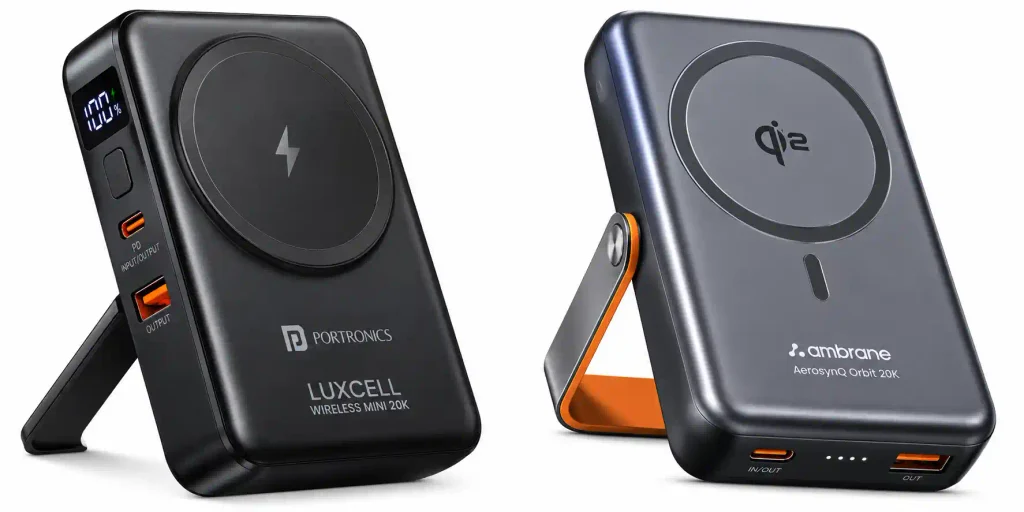
- Portronics Luxcell Wireless Mini 20K & Ambrane AerosynQ Orbit 20K (Qi2/MagSafe): Wireless 20,000mAh units combine a 15W magnetic wireless charging pad (compatible with MagSafe iPhones and Qi/Qi2 Android phones with magnetic cases) with 20W–35W wired USB-C ports.
- Practical Caveat: Because a 20,000mAh battery weighs 350g–420g, snapping it magnetically onto the back of your phone makes the handset heavy for one-handed use. Furthermore, wireless induction loses 25%–35% more energy as heat compared to a wired USB-C cable, especially in warm Indian weather. Use the wireless pad for desk convenience and the USB-C port when you want maximum battery efficiency.
4. Best Budget 20000mAh Power Banks Under ₹1,500
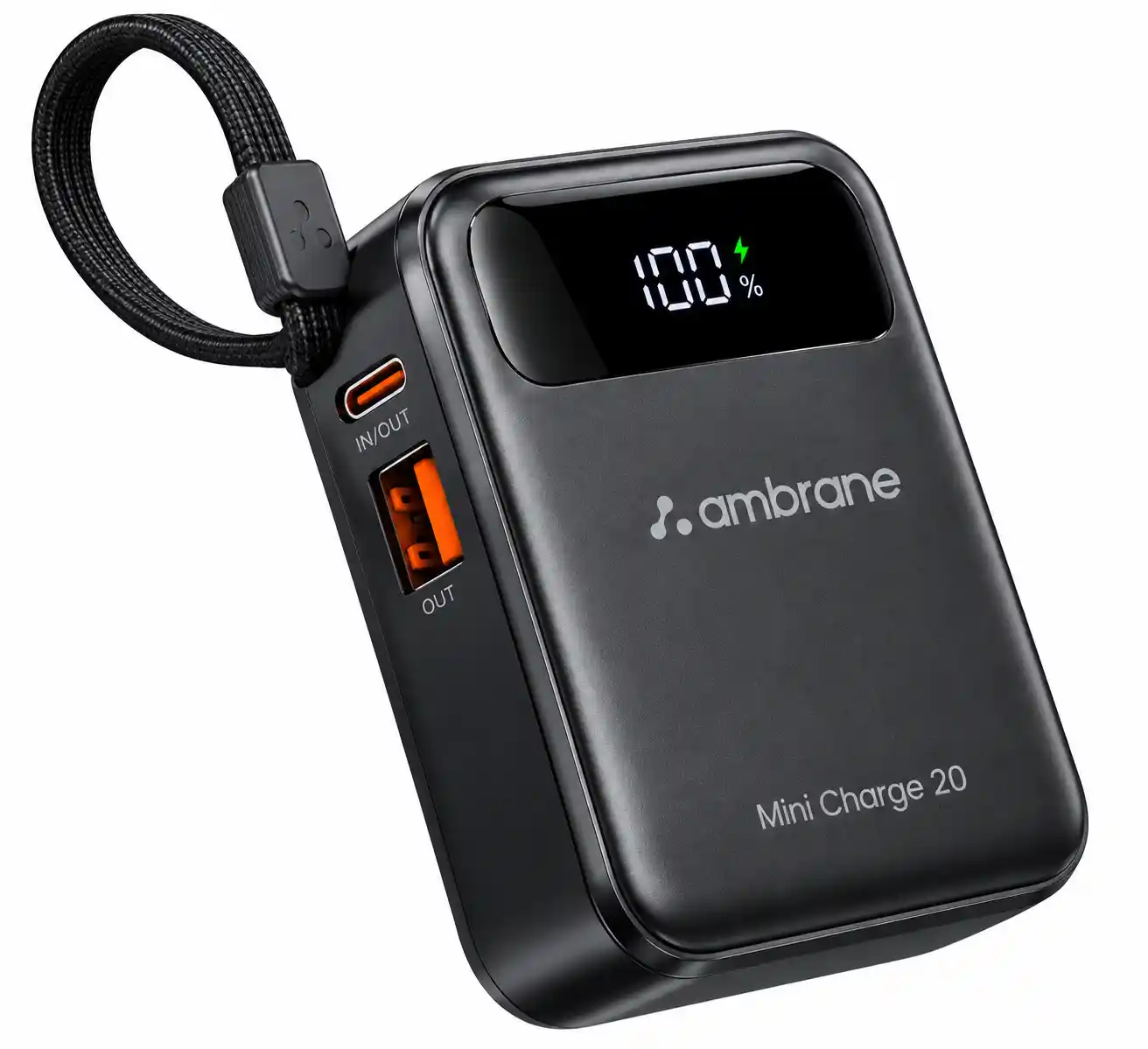
Ambrane MiniCharge 20
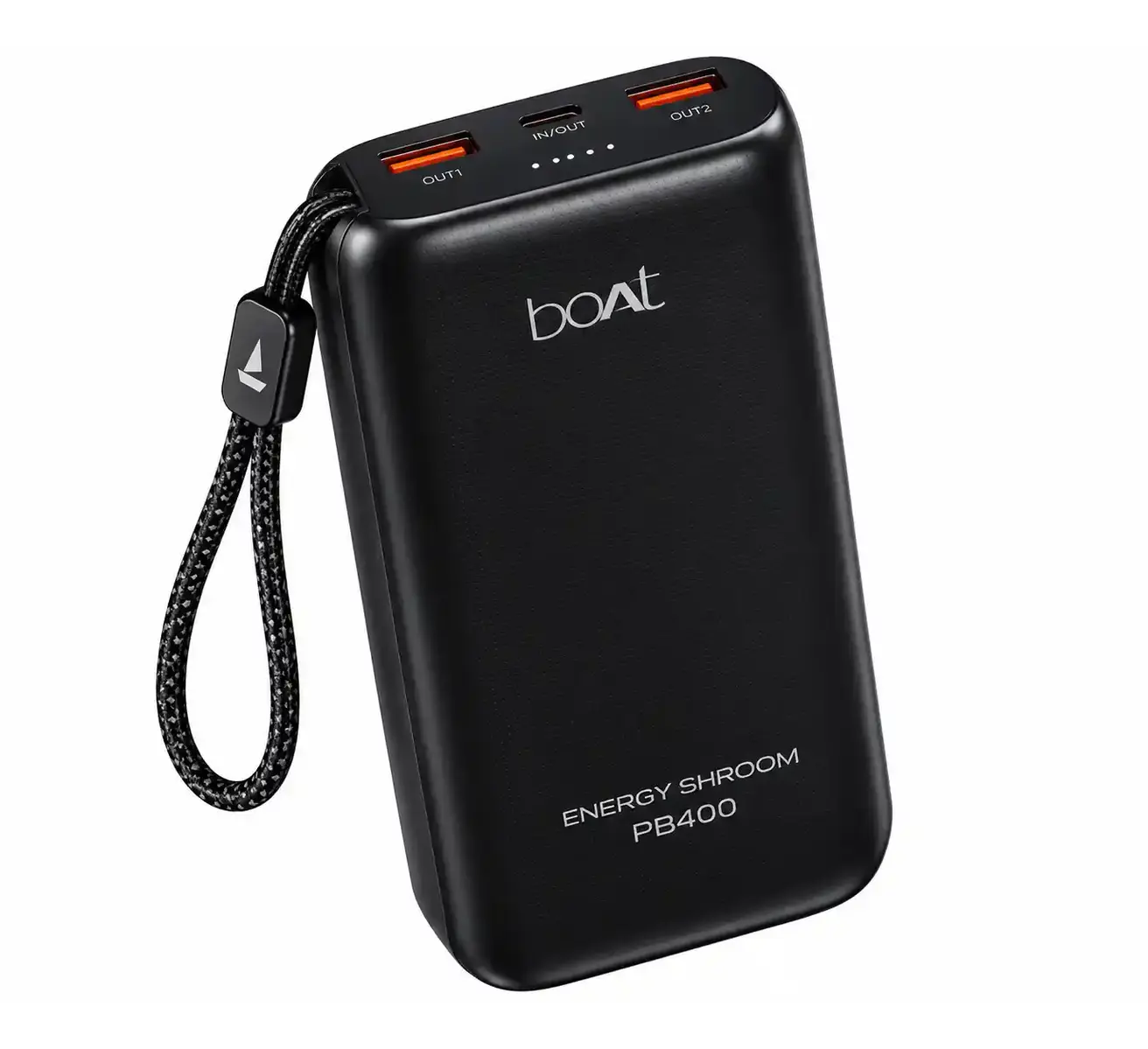
boAt EnergyShroom PB400
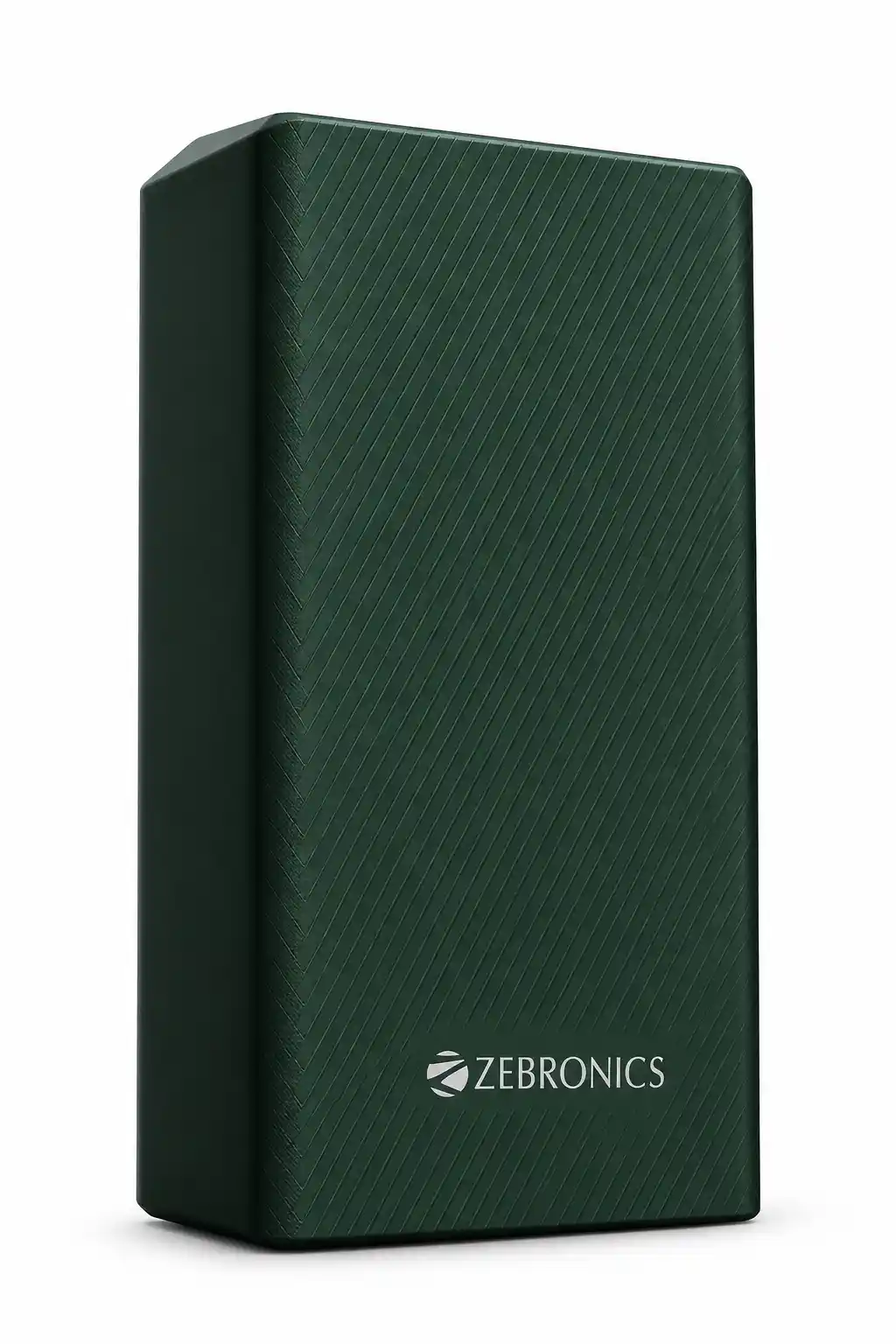
Zebronics EnergiTank 20MR1
Note that Ambrane and Zebronics typically provide a 6-month warranty, whereas Xiaomi, boAt, and Portronics offer a 1-year warranty.
Why a 20,000mAh Power Bank Only Gives ~12,500mAh
One of the most common complaints on Indian e-commerce platforms is: “My phone has a 5,000mAh battery, so a 20,000mAh power bank should charge it 4 full times. Why did it die after 2.5 charges?”
This is not a scam; it is basic battery physics.
Nominal Cell Voltage (3.7V vs. 5V): The Lithium-Ion or Lithium-Polymer cells inside a power bank have a nominal voltage of 3.7V (or 3.85V). Therefore, the total stored energy is:
Why a 20,000mAh Power Bank Doesn’t Deliver 20,000mAh
A power bank stores energy at its internal battery voltage. When that energy is converted to USB output, some is lost as heat. Here’s how the calculation works.
01. Calculate Total Stored Energy
Internal battery voltage: 3.7V
02. Convert Energy to 5V USB Capacity
USB output voltage: 5V
03. Account for Conversion Losses
Voltage conversion, circuitry and cable resistance reduce the energy delivered to your device. For illustration, assume 10%–18% total loss.
This is an illustrative estimate, not a guaranteed rated capacity. Actual results depend on the specific power bank and charging conditions.
04. How Many Times Can It Charge Your Phone?
These are rough practical estimates. Phone battery voltage, charging losses, phone usage and power-bank quality affect the actual number of full charges.
How to Choose and Use a Fast Charging Power Bank (Step-by-Step)
Follow these five steps before purchasing to ensure your device actually triggers fast charging:
- Check Your Device’s Fast-Charging Protocol:
- iPhone (12 to 16 Series) & iPads: Requires USB-C Power Delivery (PD) of 20W to 30W.
- Samsung Galaxy (S-Series, Z-Series, A-Series, M-Series): Requires USB-C PD with PPS (Programmable Power Supply). Look for 25W PPS (for base models) or 45W PPS (for Ultra/Plus models). Without PPS, Samsung phones drop to 15W.
- Google Pixel: Requires USB-C PD 3.0 with PPS (27W–37W).
- Xiaomi / Redmi / Poco: Works well with PD 3.0/PPS, or native Xiaomi power banks (33W/67W) that support proprietary Mi Turbo Charge.
- OnePlus / Realme / Oppo / Vivo / iQOO: Check if your phone supports PD/PPS fallback (newer flagships like the OnePlus 12/13 and iQOO 12/13 support 27W–55W PD/PPS) or buy a SuperVOOC-compatible power bank (like the Realme 45W unit).
- Verify Single-Port vs. Multi-Port Wattage Splitting: Many brands advertise “22.5W Fast Charging,” which holds true only when a single device is plugged in. The moment you plug a second phone into the adjacent port, most power banks drop both ports down to basic 5V/3A (15W shared) slow charging. If you frequently charge two devices at fast speeds simultaneously, choose a 65W+ model (like URBN 70W or Anker 87W).
- Check the E-Marker Rating on Your USB-C Cable: Fast charging up to 60W works on standard 3A USB-C cables. However, if you buy a 65W, 67W, or 87W power bank, you must use a 5A (100W-rated) E-Marker USB-C to USB-C cable to hit maximum speed.
- Confirm BIS Registration (IS 13252): Inspect the product listing or back of the chassis for the Bureau of Indian Standards CRS mark (R-XXXXXXXX). Avoid unbranded grey-market imports sold in local markets, which often lack over-voltage protection and use recycled cells.
- Pair with a Fast Wall Adapter for Input Charging: A 20,000mAh power bank comes without a wall brick in the box. Use a minimum 30W to 65W PD wall charger to recharge the power bank itself in 1.5 to 3.5 hours. Using an old 10W (5V/2A) adapter will take 10 to 12 hours.
Benefits and Limitations of 20,000mAh Fast Charging Power Banks
Practical Benefits
- Multi-Device Versatility: Easily handles a full day of heavy travel for two people, or tops up a smartphone, TWS earbuds, and a tablet on a single charge.
- Quick Top-Ups in Short Windows: With 30W–67W output, you can take a dead phone from 0% to 50% in roughly 20–30 minutes while walking between meetings or waiting at a boarding gate.
- Better Lifespan per Charge Cycle: Because you only drain a 20,000mAh unit once every few days rather than daily (unlike a 5,000mAh mini pack), the cells take longer to reach their 300–500 cycle degradation threshold.
Honest Limitations & Risks
- Weight and Bulk: Expect a 20,000mAh power bank to weigh between 340 grams and 460 grams—roughly twice the weight of a modern smartphone. It will pull down trouser pockets and belongs in a backpack or sling bag.
- Thermal Throttling in Indian Summers: Fast charging generates heat. If you fast-charge your phone inside a non-AC bus, train, or outdoors when ambient temperatures exceed 38°C–42°C, both the power bank and your smartphone will automatically throttle speeds down to 10W–15W to protect the battery chemistry.
Common Problems & Troubleshooting
Problem 1: My power bank stops charging my Bluetooth earbuds or smartwatch after 30 seconds.
Why it happens: Earbuds and smartwatches draw a tiny trickle current (often below 60mA–100mA). The power bank thinks no device is connected and shuts off to save power.
The Fix: Activate Low-Power / Trickle-Charging Mode. On most Xiaomi, URBN, and Realme power banks, double-press the power button until the LED indicators blink in sequence. This forces the ports to stay awake for 2 hours.
Problem 2: My phone says “Charging” instead of “Fast Charging” / “Super Fast Charging”.
Why it happens: Either you plugged into the wrong port, a second device is sharing the load, or your cable is limited to 2A/3A.
The Fix: Unplug all other devices, connect directly to the USB-C port (which carries PD/PPS protocols), and swap to the original Type-C cable that came with your phone or power bank.
Problem 3: All 4 LED lights blink, or the power bank won’t charge my phone while the power bank is plugged into the wall.
Why it happens: Either the model does not support pass-through charging, or you accidentally plugged both ends of a cable into the power bank’s own ports (triggering short-circuit protection).
The Fix: Reset the internal protection IC by plugging the power bank into a wall charger for 10 seconds, then unplugging it.
10.FAQ
1. How many times can a 20000mAh power bank charge a 5000mAh phone?
A 20,000mAh power bank can realistically charge a 5,000mAh smartphone 2.4 to 2.7 times from 0% to 100%. Because the internal battery cells store power at 3.7V and must convert it to 5V–9V to charge your phone, around 30% to 35% of the theoretical mAh figure is consumed during voltage step-up and heat dissipation, leaving 12,000mAh to 13,500mAh of usable output.
2. How long does it take to fully charge a 20000mAh power bank?
Charging time depends entirely on the power bank’s input wattage and your wall adapter:
- With a 65W PD input (e.g., Anker 87W / URBN 70W): 1.5 to 2 hours.
- With a 30W PD input (e.g., Xiaomi 4i): 4 to 4.5 hours.
- With an 18W–20W fast charger (e.g., budget 22.5W models): 6 to 7 hours.
- With a standard 10W (5V/2A) charger: 10 to 12 hours.
3. Which is better for a 20000mAh power bank: Lithium-Polymer (Li-Po) or Lithium-Ion (Li-ion)?
Both are safe when BIS-certified, but they offer different form factors. Lithium-Polymer (Li-Po) uses flat pouch cells, allowing brands like Ambrane, URBN, and Stuffcool to build slimmer, lighter power banks with lower self-discharge rates. Lithium-Ion (Li-ion) uses cylindrical cells (such as high-density 21700 automotive-grade cells used in Xiaomi’s 4i and 5i series), which are slightly thicker but excel at sustained high-wattage (33W–67W) discharge and offer strong long-term cycle durability.
4. Can I carry a 20000mAh power bank on domestic and international flights in India?
Yes. Under DGCA and BCAS aviation rules in India, power banks up to 100Wh (Watt-hours) are permitted in your cabin (hand) baggage. A 20,000mAh power bank is rated at 74Wh, which is well below the 100Wh ceiling. Never place any power bank in check-in luggage, and ensure the capacity label printed on the casing is clearly legible for CISF security checks.
5. Can a 20000mAh power bank charge a laptop?
Yes, provided the power bank supports at least 45W to 65W USB-C Power Delivery (PD) output and your laptop supports USB-C charging. Standard 22.5W or 33W smartphone power banks only output 9V or 12V and cannot supply the 20V rail required by most laptops. A 65W 20,000mAh unit (74Wh) will typically provide 0.8 to 1.1 full charges for a MacBook Air or standard 50Wh–60Wh Windows ultrabook.
Final Takeaway
Choosing the best power bank 20000mAh fast charging model comes down to matching the output wattage to your daily devices rather than chasing the lowest price tag.
- For reliable everyday smartphone & tablet charging: Pick the Xiaomi Power Bank 4i (33W) or Belkin BoostCharge 20K (30W).
- For laptops + flagship phones: Step up to a 65W+ USB-C PD unit like the Xiaomi Power Bank 5i (67W), URBN Ultra Volt (70W), Stuffcool Major Ultra (65W), or Anker 87W.
- For strict budgets under ₹1,500: Stick with BIS-certified 22.5W picks like the Ambrane MiniCharge 20 or boAt EnergyShroom PB400.
Before checking out, double-check that you have a 30W+ USB-C PD wall charger at home so you can recharge your new power bank quickly between trips