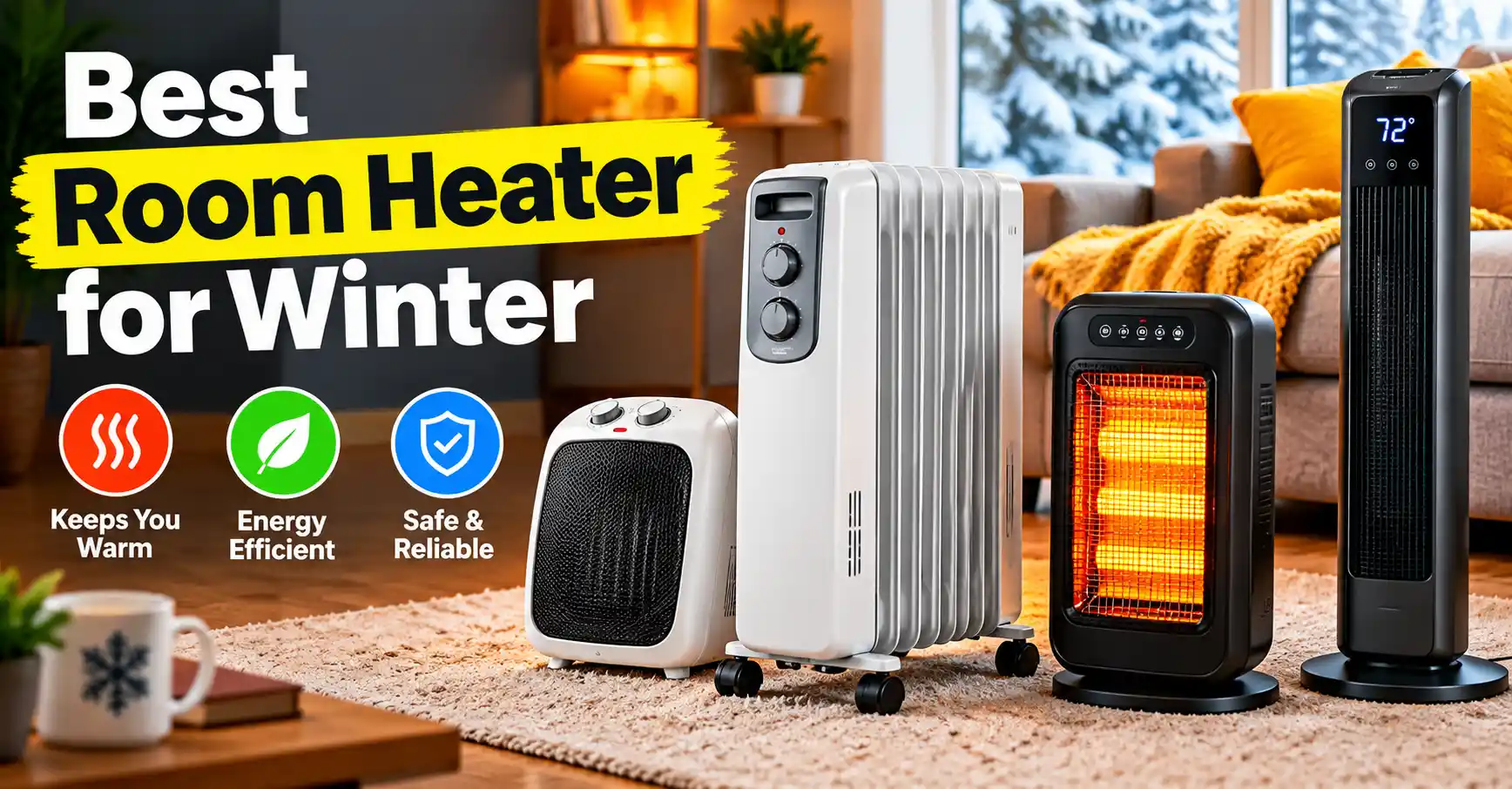
Choosing the best room heater in India depends on more than just the price. You need to consider your room size, heating speed, electricity consumption, noise level, safety features and how frequently you plan to use the heater.
There are several types of room heaters available, including halogen/radiant heaters, fan heaters, ceramic PTC heaters and oil-filled radiators (OFRs). Each type is designed for a different use case.
In this guide, we’ll explain the different types of room heaters, their advantages and disadvantages, how much electricity they can consume, what wattage you need for your room and the important safety features you should check before buying.
Which Room Heater Is Best?
Choose the heater type based on your heating needs and room requirements.
| Your Requirement | Recommended Heater |
|---|---|
| Cheapest option for personal heating | Radiant / Halogen |
| Fast heating for a small room | Fan Heater |
| Fast heating with PTC technology | Ceramic PTC Heater |
| Quiet and steady heating | Oil-Filled Radiator |
| Large bedroom | Oil-Filled Radiator |
| Heating yourself while studying/working | Radiant Heater |
| Portable heating | Fan/Ceramic Heater |
For most buyers, there is no single “best” room heater. The right choice depends on your room size, budget and how you want to use it.
Types of Room Heaters
Room heaters generally produce warmth through radiation or convection.
Let’s look at the most common types available in India.
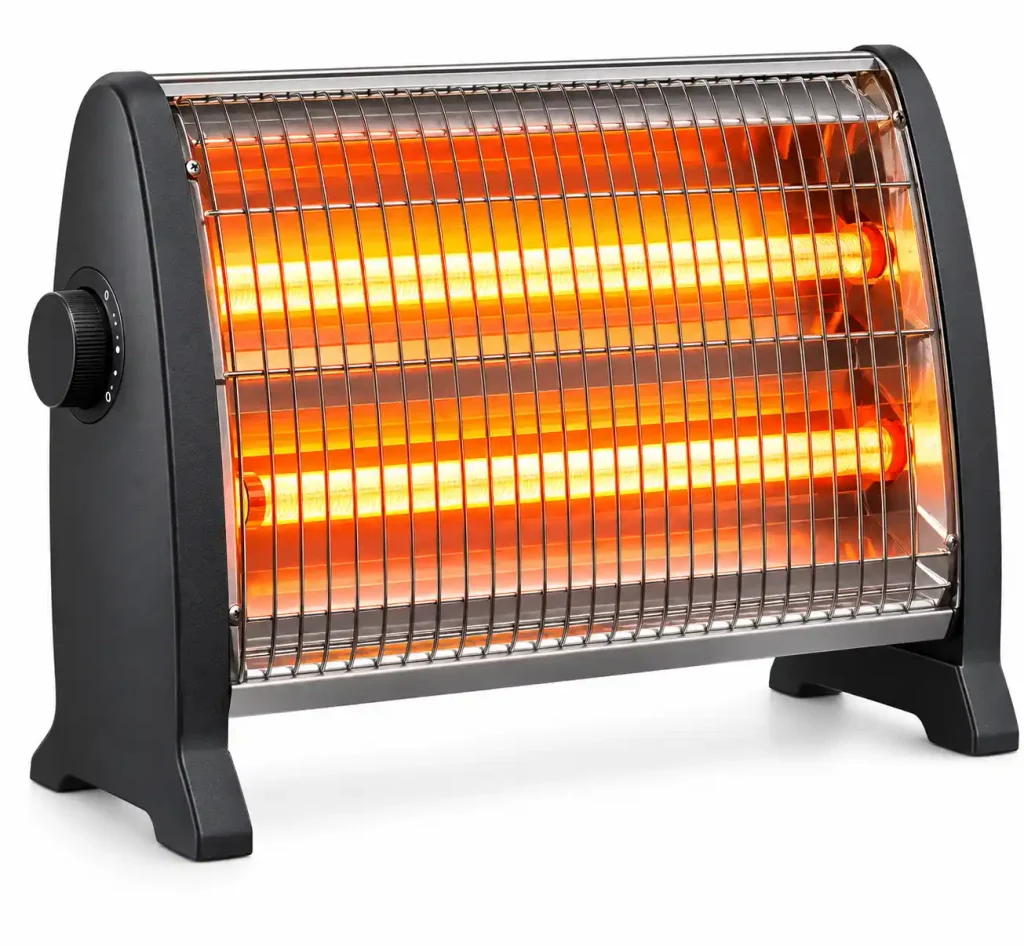
1. Radiant / Halogen / Quartz Heater
Radiant heaters use infrared radiation to provide direct warmth. Instead of primarily heating the entire room, they heat people and objects directly in front of the heating element.
Advantages
- Provides heat almost instantly
- Usually inexpensive
- Silent operation
- Good for personal or spot heating
- Simple to operate
- Generally lightweight
Disadvantages
- Mainly heats the area directly in front of the heater
- Exposed heating elements can become extremely hot
- Not ideal for unattended operation
- Can be less effective for heating a large room evenly
Here are some best suggetions for Radiant / Halogen / Quartz Heater according to our research:
Best for:
A radiant heater is a good option if you sit in one place for long periods, such as while:
- Studying
- Working at a desk
- Watching television
- Sitting in a small room
Best choice for: Budget buyers who want quick personal warmth.
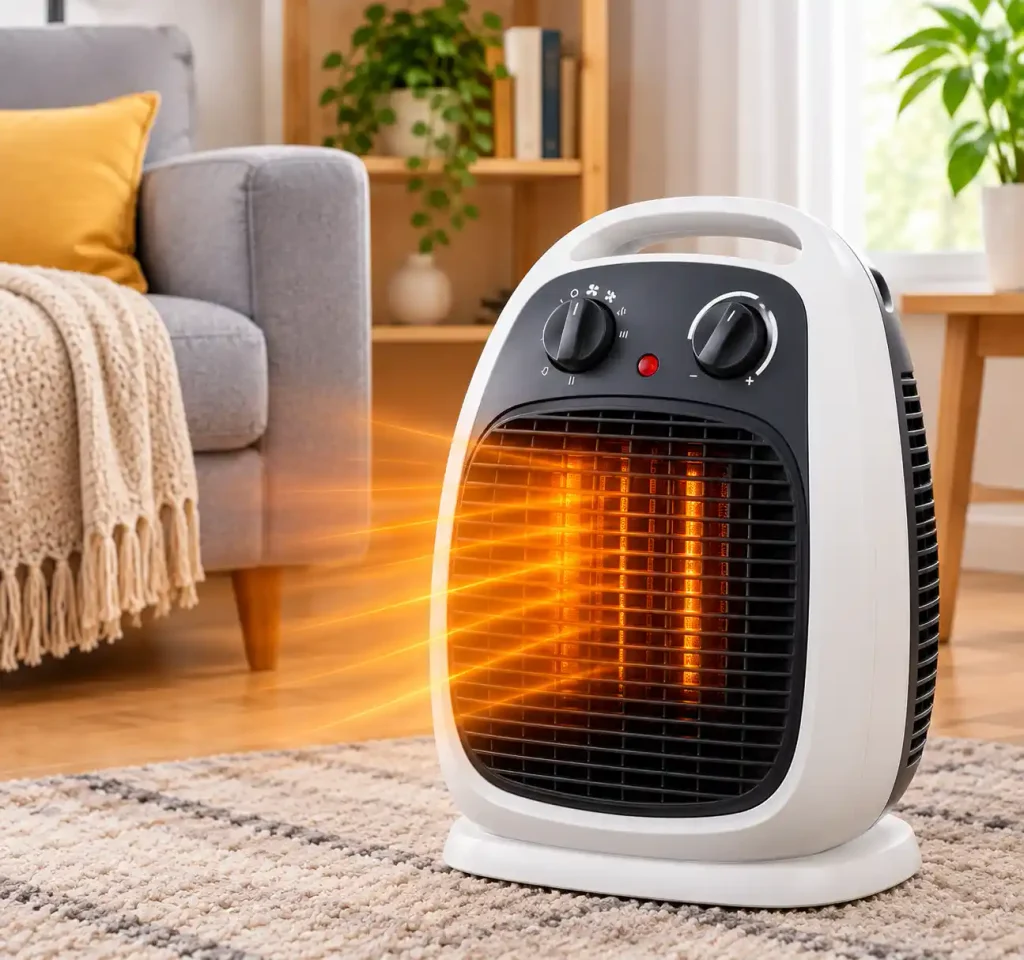
2. Fan Heater
Fan heaters use an electrical heating element and a fan to circulate warm air around the room.
Because warm air is actively pushed into the room, they can provide a noticeable increase in temperature relatively quickly.
Advantages
- Fast heating
- Compact and portable
- Usually affordable
- Suitable for small rooms
- Easy to move between rooms
Disadvantages
- Fan noise
- Does not retain heat after being switched off
- Can make the room feel dry
- Airflow can spread dust around the room
Here are some best suggetions for Fan Heater according to our research:
Best for
Fan heaters are suitable for people who want quick heating in a small bedroom, study room or office.
Best choice for: Quick heating on a budget.
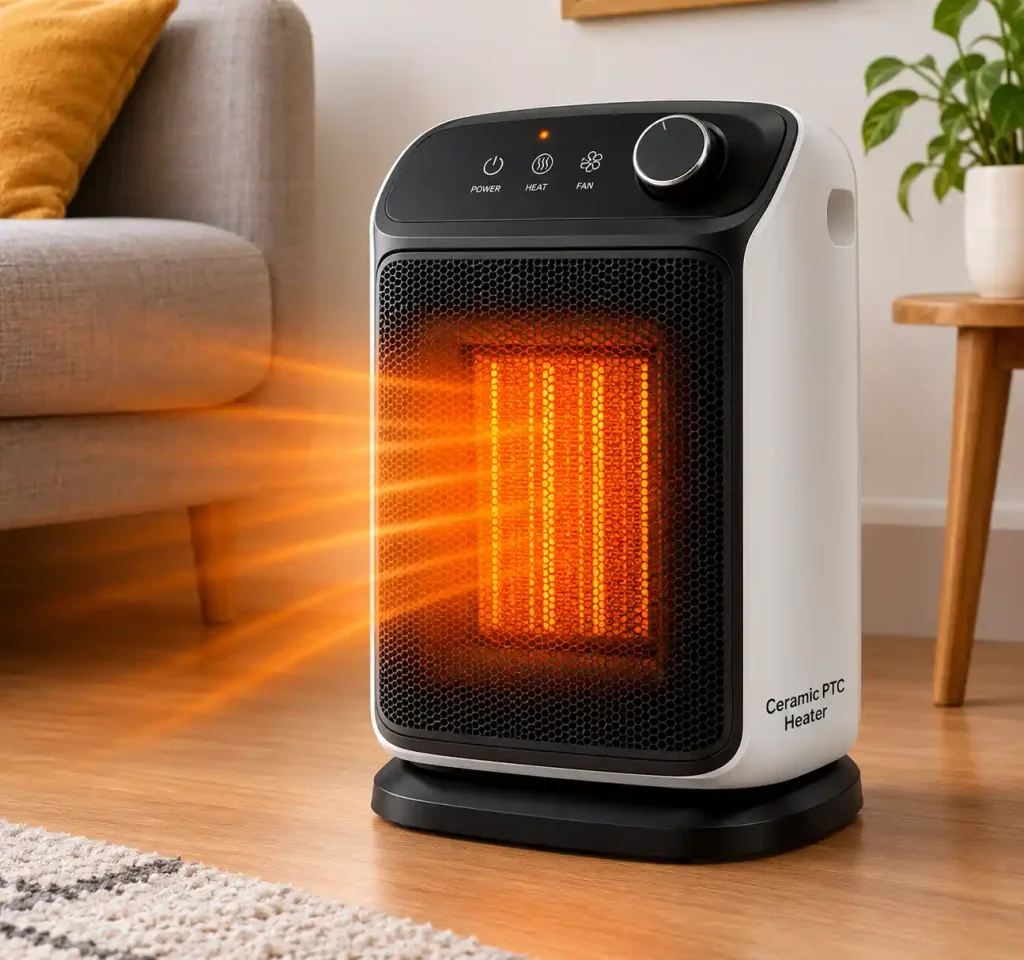
3. Ceramic PTC Heater
Ceramic heaters use Positive Temperature Coefficient (PTC) heating elements. PTC materials increase their electrical resistance as their temperature rises, which can help regulate heat output.
Many ceramic heaters also include a fan to distribute warm air.
Advantages
- Fast heating
- Compact design
- Easy to carry
- Many models include thermostats
- Some models include multiple heating modes
- PTC technology can help regulate heating output
Disadvantages
- Fan noise
- Usually more expensive than basic radiant heaters
- Still consumes significant electricity at higher power settings
Here are some best suggetions for Ceramic PTC Heater according to our research:
Best for:
Ceramic PTC heaters are a good choice if you want quick heating and a compact heater for a small or medium-sized room.
Best choice for: Small bedrooms, study rooms and home offices.
- Small bedrooms
- study rooms
- home offices.
4. Oil-Filled Radiator (OFR)
Oil-filled radiators work differently from fan and radiant heaters.
Electricity heats a sealed thermal fluid inside the radiator. The heated fluid transfers heat to the metal fins, which then warm the surrounding air.
The oil is sealed inside the heater and does not need to be replaced or refilled.
Advantages
- Silent operation
- Provides steady, gradual heating
- No fan noise
- Suitable for longer heating sessions
- Does not consume oxygen through combustion
- The metal radiator retains heat for some time after switching off
Disadvantages
- Higher purchase price
- Heavy compared with fan heaters
- Takes longer to warm up
- Uses substantial electrical power while actively heating
Here are some best suggetions for Oil-Filled Radiator (OFR) Heater according to our research:
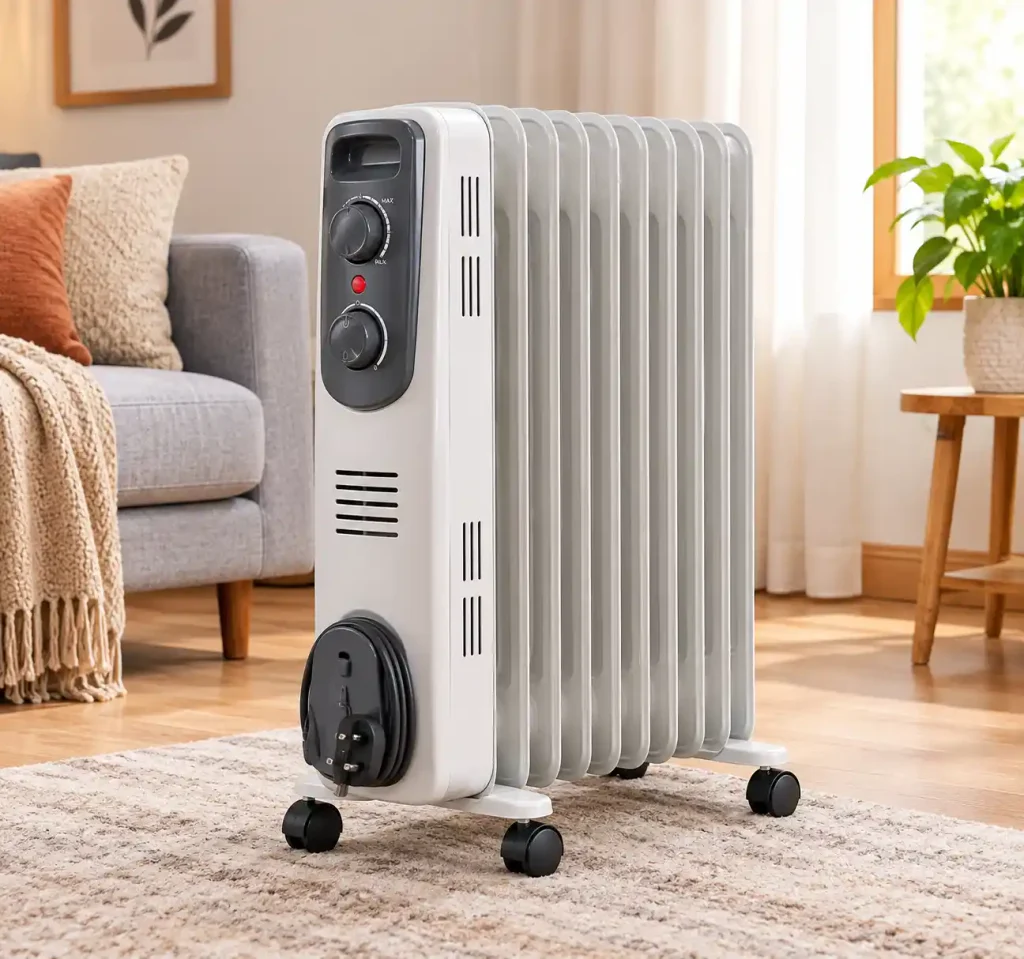
Best for
OFR heaters are particularly useful for larger bedrooms and rooms where quiet, steady heating is preferred.
Best choice for: Large rooms and people who prefer silent, gradual heating.
Important: An oil-filled radiator is not automatically safe to leave running unattended or while sleeping. Always follow the manufacturer’s instructions and use the heater with appropriate safety precautions.
| Feature | Radiant / Halogen | Fan Heater | Ceramic PTC | Oil-Filled Radiator |
|---|---|---|---|---|
| Heating speed | Very fast | Fast | Fast | Slow |
| Noise | Silent | Moderate | Moderate | Silent |
| Personal heating | Excellent | Good | Good | Moderate |
| Whole-room heating | Limited | Good | Good | Excellent |
| Portability | Excellent | Excellent | Excellent | Poor |
| Initial price | Low | Low | Medium | High |
| Long heating sessions | Moderate | Moderate | Good | Excellent |
| Heat retention | Low | Low | Low | Good |
| Best for | Spot heating | Small rooms | Small/medium rooms | Larger rooms |
How Much Does a Room Heater Cost in India?
Price Disclaimer: Room heater prices vary depending on the heating technology, wattage, brand and features.
| Heater Type | Approximate Price Range | Best Use |
|---|---|---|
| Radiant / Halogen | ₹1,200–₹3,000 | Personal heating |
| Fan Heater | ₹1,500–₹4,000 | Small rooms |
| Ceramic PTC | ₹2,000–₹5,000 | Small/medium rooms |
| Oil-Filled Radiator | ₹7,000–₹15,000+ | Larger rooms |
What Wattage Room Heater Do You Need?
One of the most common questions is:
How many watts of heater do I need for my room?
There is no universal wattage because heating requirements depend on room size, ceiling height, insulation, outside temperature, windows and ventilation.
A commonly used rule of thumb is around 10 watts per square foot, but treat this only as a starting estimate rather than an exact calculation.
Approximate Guide
| Room Size | Suggested Heater Range |
|---|---|
| 80–100 sq ft | 1,000–1,500W |
| 100–150 sq ft | 1,500W |
| 150–200 sq ft | 1,500–2,000W |
| 200+ sq ft | 2,000W+ / Consider OFR |
For example, if your room is:
10 ft × 12 ft = 120 sq ft
A heater around 1,500W may be a reasonable starting point, depending on the room’s insulation and climate.
Factors That Can Change the Requirement
You may need more heating capacity if:
- The room has large windows
- There are significant drafts
- The ceiling is high
- The room is poorly insulated
- The outside temperature is very lowDoors are frequently opened
How Much Electricity Does a Room Heater Consume?
Room heaters can consume significant electricity because heating requires relatively high power.
The basic formula is:
Electricity consumed (kWh) = Heater power (kW) × Operating time (hours)
For example, a 2,000W heater is equivalent to 2kW.
If it runs for 4 hours:
2kW × 4 hours = 8 kWh
So it consumes approximately 8 units of electricity.
If your electricity rate were ₹7 per unit:
8 × ₹7 = ₹56 per day
If used for 30 days:
₹56 × 30 = ₹1,680 per month
This is only an example. Your actual electricity cost depends on your tariff and how frequently the heater operates.
Approximate Consumption at 4 Hours/Day
Heater Power| Daily Consumption| 30-Day Consumption
| Heater Wattage | Units 4 Hour | Units Per 30 Hours |
|---|---|---|
| 1,000W | 4 units | 120 units |
| 1,500W | 6 units | 180 units |
| 2,000W | 8 units | 240 units |
Your choice should depend on how you use the room.
Choose a Radiant Heater If:
- You mainly need personal heating
- You sit in one place
- You want the lowest purchase price
- You want silent operation
- You don’t need to heat the entire room evenly
Choose a Fan Heater If:
- You want quick heating
- You have a small room
- You want a compact heater
- You don’t mind fan noise
Choose a Ceramic PTC Heater If:
- You want quick heating
- You prefer a compact design
- You want features such as thermostat control
- You’re heating a small or medium-sized room
Choose an Oil-Filled Radiator If:
- You want quiet operation
- You need steady heating
- You have a larger room
- You prefer gradual, more uniform heating
- You don’t mind the higher purchase price and weight
Important Room Heater Safety Features
Safety should be one of the most important factors when buying a room heater.
Look for these features:
1. Tip-Over Protection
The heater should automatically switch off if it accidentally falls over.
This is particularly important if you have children or pets.
2. Overheat Protection
An internal protection system can switch the heater off if its temperature becomes excessively high.
3. Thermostat
A thermostat allows the heater to regulate its operation according to the selected temperature.
This can improve comfort and potentially reduce unnecessary heating.
4. Thermal Fuse
A thermal fuse provides another layer of protection against excessive temperatures.
5. Sturdy Construction
The heater should have a stable base and should not easily tip over.
Room Heater Safety Tips
Even a heater with multiple safety features should be used correctly.
Keep flammable objects away
Keep the heater away from:
- Curtains
- Beds
- Clothes
- Paper
- Furniture
- Rugs and other easily combustible materials
A clearance of around 3 feet (1 metre) from combustible materials is a useful safety guideline unless the manufacturer specifies otherwise.
Plug the heater into an appropriate wall outlet
High-power heaters can draw substantial current.
Avoid cheap extension boards, overloaded power strips and unsuitable adapters. Use an electrical outlet and wiring that are appropriately rated for the heater’s power.
Don’t cover the heater
Never cover a heater or block its ventilation openings.
Don’t use it to dry clothes
Do not place clothes, towels or blankets over a room heater.
Keep it away from water
Never use a standard room heater in a wet location unless it is specifically designed and rated for that environment.
Don’t leave a portable heater unattended
Turn the heater off when leaving the room and follow the manufacturer’s instructions regarding overnight use.
Which Heater Is Better: Fan Heater or Oil Heater?
It depends on what you need.
Fan heater: Better if you want fast heating in a small room and portability.
Oil-filled radiator: Better if you want quiet, gradual and steady heating, especially in a larger room.
If your priority is instant warmth, choose a fan or ceramic heater.
If your priority is quiet, steady heating, an OFR may be a better choice.
Which Heater Is Best for a Small Bedroom?
For a small bedroom, a 1,000W–1,500W fan or ceramic heater can be a practical choice, depending on insulation and outdoor temperature.
If you mainly sit at a desk and want personal warmth, a radiant heater can also be suitable.
Which Heater Is Best for a Large Room?
For a larger room, an oil-filled radiator can be a good option because it provides steady heat without fan noise.
However, the required wattage still depends on the room’s size, insulation and climate.
For very large spaces, a single portable heater may not provide uniform heating.
Is a Higher-Wattage Heater Better?
Not necessarily.
A higher-wattage heater can produce more heat, but it also has the potential to consume more electricity when operating continuously.
Instead of simply choosing the highest wattage available, choose a heater appropriate for your room size and look for useful features such as:
- Thermostat
- Multiple power modes
- Overheat protection
- Tip-over protection
- Timer
- Adjustable temperature
How to Save Electricity When Using a Room Heater
You can reduce unnecessary heating costs by:
1. Closing doors and windows while heating.
2. Reducing drafts around doors and windows.
3. Using the appropriate heater size.
4. Using thermostat control when available.
5. Avoiding unnecessarily high temperature settings.
6. Turning the heater off when the room is comfortable.
7. Using a timer where appropriate.
8. Keeping the heater and its air intake/outlet unobstructed.
Remember that an electric resistance heater generally converts nearly all of its electrical input into heat at the point of use, so choosing a “higher efficiency” resistance heater does not magically eliminate electricity consumption. Features such as thermostatic control and appropriate sizing are more important for reducing unnecessary runtime.
Frequently Asked Questions
Do room heaters consume a lot of electricity?
Yes. Electric room heaters can consume significant electricity because they typically operate at relatively high power levels.
For example, a 2,000W heater operating continuously for four hours consumes approximately 8 kWh, or 8 units.
Do electric room heaters reduce oxygen?
Normal electric room heaters do not consume oxygen through combustion because they use electricity rather than burning fuel.
However, heating can make indoor air feel drier, and poor ventilation can make a room feel stuffy.
Which room heater is safest?
Safety depends heavily on the heater’s design and how it is used.
Look for features such as tip-over protection, overheat protection, thermal protection and a stable design, and always follow the manufacturer’s safety instructions.
Can I sleep with a room heater on?
It is better not to treat any portable heater as automatically safe for unattended overnight operation.
If you intend to use a heater while sleeping, follow the manufacturer’s instructions carefully and choose a model specifically designed with appropriate safety protections. Never use a heater that is damaged, unstable, covered or connected through an unsuitable extension or power strip.
Which is better: ceramic or halogen heater?
A ceramic heater is generally better when you want to warm the air in a small room quickly.
A halogen/radiant heater is better for direct, personal heating when you’re sitting close to it.
How much wattage do I need for a 10×10 room?
A 10×10-foot room is approximately 100 sq ft.
A heater around 1,000W–1,500W can be a reasonable starting point, although the actual requirement depends on insulation, ceiling height, outdoor temperature and ventilation.
Is an oil-filled radiator expensive to run?
An OFR can consume substantial electricity because it is still an electric resistance heater.
Its advantage is not that the oil magically makes electricity cheaper. Instead, the thermal mass allows the heater to provide steady heat and retain warmth for some time after the heating element cycles off.
Can I use an extension board with a room heater?
Avoid using cheap or overloaded extension boards and power strips with high-power heaters.
Use an appropriately rated electrical outlet and wiring, and follow the heater manufacturer’s electrical requirements.
Final Verdict: Which Room Heater Should You Buy?
There isn’t one room heater that is perfect for everyone.
For personal heating: Choose a radiant/halogen heater.
For fast heating: Choose a fan heater.
For quick heating with PTC technology: Choose a ceramic PTC heater.
For quiet, steady heating in a larger room: Consider an oil-filled radiator.
Before buying, don’t focus only on the price. Check the wattage, room size, thermostat, tip-over protection, overheat protection, electrical requirements and warranty.
The best room heater is the one that provides enough heat for your room while fitting your budget and being used safely.
READ THIS ALSO : 1.Best Camera Phone Under ₹20,000 in India (2026): Top Picks
2.Best Earbuds Under ₹1,500 in India: Top Budget TWS Earbuds Compared